How Kids Learn Through Construction Play: A Parent’s Guide
Construction play—building towers, roads, bridges, or imaginary cities—is more than just fun. It’s a powerful learning tool that helps children develop cognitive, physical, social, and emotional skills. From toddlers stacking blocks to older kids designing elaborate LEGO structures, construction toys encourage creativity, problem-solving, and spatial reasoning while providing hours of engaging play.
This guide will explore how children learn through construction play, what skills they develop, age-appropriate toys, and practical tips for supporting your child’s building adventures at home.
What Is Construction Play?
Construction play involves using materials to create structures, objects, or environments, either guided by instructions or through free play. Toys can range from simple wooden blocks to sophisticated engineering kits or LEGO sets.
Key characteristics of construction play:
- Manipulation of materials: stacking, connecting, or assembling pieces
- Problem-solving challenges: figuring out how to balance, connect, or stabilize
- Creativity and imagination: designing original structures or recreating real-world objects
Construction play isn’t just about building—it’s about thinking, planning, and experimenting.
Why Construction Play Matters
1. Cognitive Development
- Spatial reasoning: Understanding how objects fit together, balance, and occupy space
- Problem-solving: Designing stable structures and experimenting with different approaches
- Planning and sequencing: Organizing steps to achieve a desired outcome
2. Fine Motor Skills
- Stacking blocks, snapping LEGO pieces, or manipulating connectors improves hand-eye coordination, dexterity, and grip strength.
3. Creativity and Imagination
- Children use construction play to create imaginary worlds, role-play scenarios, and artistic designs, fostering divergent thinking.
4. Social and Emotional Skills
- When playing with others, construction play teaches collaboration, negotiation, and patience.
- Completing a structure provides a sense of achievement, boosting confidence.
5. Early STEM Foundations
- Engineering concepts, physics, and basic math are introduced naturally:
- Balance and gravity: “Why did my tower fall?”
- Measurement and symmetry: “This bridge needs to be the same width on both sides”
- Cause-and-effect: “If I remove this block, what happens next?”
Age-Based Learning Through Construction Play
Toddlers (1–3 Years)
Focus: Exploration, stacking, and basic problem-solving
Toys:
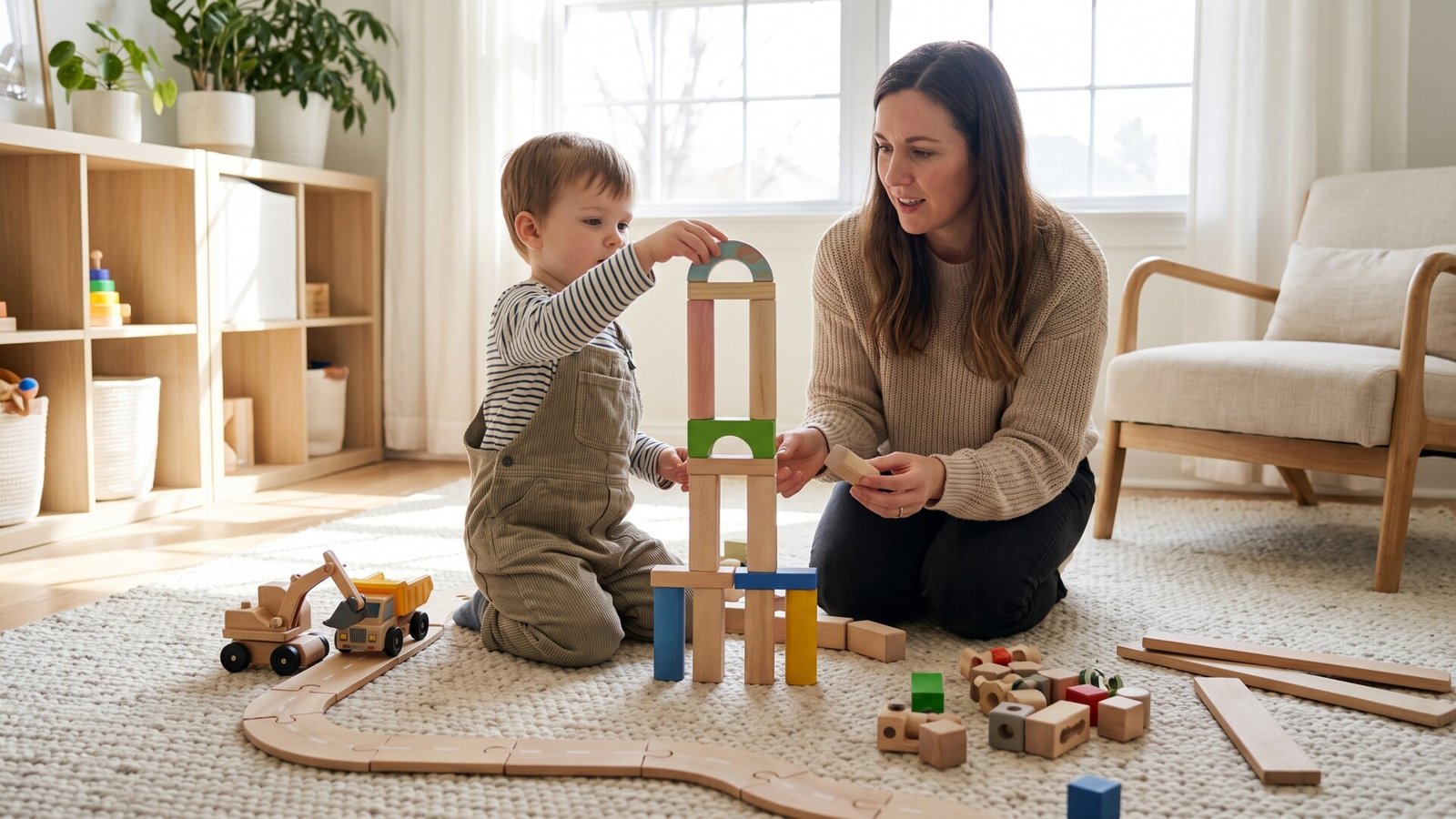
- Wooden blocks or foam blocks
- Simple LEGO Duplo sets
- Stacking cups or nesting toys
Learning Outcomes:
- Develop fine motor control through grasping and stacking
- Experiment with balance and stability
- Understand cause-and-effect relationships
Parent Tips:
- Encourage stacking and knocking down towers—it’s part of the learning process
- Ask simple questions: “Which block should go on top?”
- Keep play positive; celebrate exploration and experimentation
Preschoolers (3–5 Years)
Focus: Imaginative building, early problem-solving, and design thinking
Toys:
- LEGO Duplo or Mega Bloks
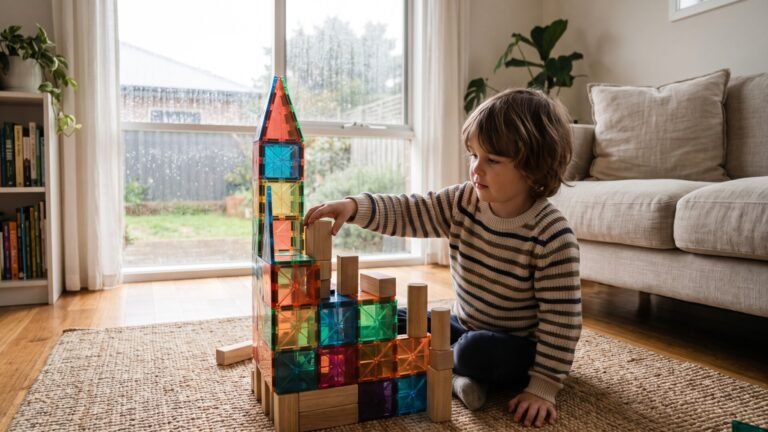
- Magnetic tiles and cubes
- Construction kits with connectors or simple gears
Learning Outcomes:
- Learn spatial relationships by connecting pieces
- Explore weight distribution and stability
- Encourage storytelling and role-play alongside building
Parent Tips:
- Provide open-ended challenges: “Can you build a bridge for your toy car?”
- Introduce basic engineering terms casually: balance, stability, structure
- Observe without taking over; let your child test ideas
Early Elementary (6–8 Years)
Focus: Problem-solving, iterative design, and collaborative play
Toys:
- Classic LEGO sets with instruction guides
- K’NEX or STEM construction kits
- Marble runs and track-building kits
Learning Outcomes:
- Learn to plan steps and follow sequences
- Introduce mechanical concepts like pulleys and levers
- Develop collaboration and negotiation skills when building with peers
Parent Tips:
- Encourage reflection: “Why do you think your tower fell?”
- Celebrate perseverance and redesigns, not just completed structures
- Rotate building materials to maintain interest and creativity
Upper Elementary (9–12 Years)
Focus: Complex design, advanced problem-solving, and STEM integration
Toys:
- LEGO Technic or Mindstorms sets
- Advanced K’NEX and engineering kits
- Robotics and coding construction kits
Learning Outcomes:
- Understand advanced mechanical principles, gears, and circuits
- Practice strategic thinking and iterative problem-solving
- Collaborate on larger projects or STEM challenges
Parent Tips:
- Support self-directed projects, encouraging experimentation and iteration
- Introduce concepts of load, weight, and structural integrity through play
- Encourage sharing projects or solutions with peers to build communication skills
How Children Learn Through Construction Play
1. Trial and Error
- Experimenting with structures teaches that failure is part of learning
- Children learn to adapt, revise, and improve designs
2. Cause and Effect
- Dropping a block, removing a piece, or testing stability demonstrates predictable consequences
- Supports critical thinking and logical reasoning
3. Spatial Awareness
- Moving pieces, aligning blocks, and planning layouts develops visual-spatial intelligence
4. Creativity and Imagination
- Role-playing and storytelling enhances creativity, allowing children to explore new ideas
- Encourages flexible thinking and innovation
5. Collaboration and Communication
- Shared building projects require teamwork, compromise, and planning
- Children learn to articulate ideas and negotiate solutions
Tips for Parents to Support Construction Play
- Provide Open-Ended Materials:
- Blocks, LEGO bricks, magnetic tiles, and K’NEX sets allow imaginative building.
- Ask Open-Ended Questions:
- “What happens if you move this piece?”
- “How can we make your tower taller without falling?”
- Celebrate the Process:
- Focus on creativity and problem-solving rather than just a finished product.
- Encourage Reflection:
- Ask children to explain why they made design choices.
- Integrate STEM Concepts Naturally:
- Discuss stability, balance, simple machines, and cause-and-effect during play.
- Rotate Materials:
- Keep play fresh and stimulating by changing blocks, connectors, or building challenges.
DIY Construction Play Ideas
You don’t need fancy kits to engage in construction play. Here are budget-friendly, hands-on ideas:
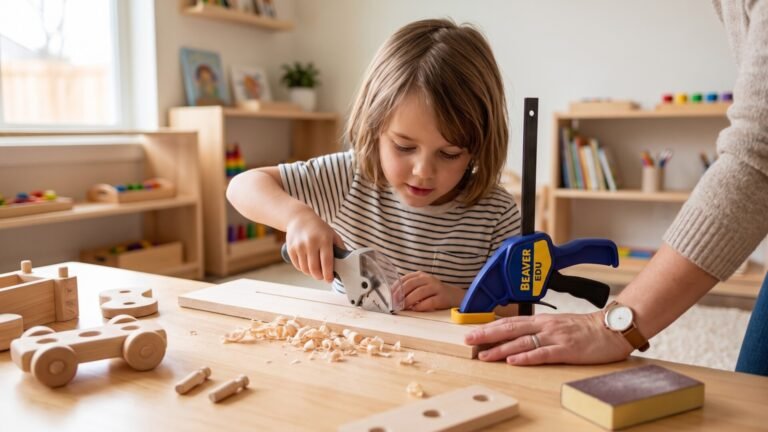
- Cardboard Building: Use boxes, tubes, and tape to create structures, towers, or playhouses.
- Cup Towers: Stack disposable cups for balance and stability challenges.
- Recyclable Material Vehicles: Create cars, planes, or boats from bottles, straws, and cardboard.
- Marble Tracks: Use cardboard or plastic tubes to design pathways for rolling marbles.
- Bridge Building: Create small bridges with popsicle sticks or craft materials, testing their strength.
Recommended Construction Toys
- LEGO Duplo / Classic LEGO Sets – Open-ended building for toddlers to elementary-aged children
- LEGO Technic or Mindstorms – Advanced building with gears, vehicles, and coding for older kids
- Magnetic Tiles – Build towers, castles, and geometric structures
- K’NEX Building Kits – Advanced structures with connectors and gears
- Marble Runs and Roller Coasters – Cause-and-effect and problem-solving
- Wooden Block Sets – Open-ended construction for early development
- Engineering STEM Kits – Bridges, towers, vehicles, and challenge-based building
Benefits of Construction Play
- Cognitive Growth:
- Enhances problem-solving, planning, and logical thinking
- Physical Development:
- Fine motor skills, hand-eye coordination, and spatial reasoning
- Creativity and Imagination:
- Encourages innovative thinking and role-play
- Social Skills:
- Promotes collaboration, sharing, and communication
- STEM Foundation:
- Introduces engineering, physics, and math concepts naturally
Takeaways
- Construction play is a powerful learning tool, teaching problem-solving, creativity, spatial awareness, and early STEM concepts.
- Age-appropriate toys and DIY materials provide hands-on, engaging learning experiences.
- Open-ended play encourages experimentation, reflection, and resilience.
- Collaboration and discussion during construction play support social and emotional growth.
- Parents can nurture these skills by asking open-ended questions, rotating materials, and celebrating effort.
By incorporating construction play into everyday routines, parents can give children a strong foundation for creativity, problem-solving, and STEM learning, all while having fun and building confidence.