How Sensory Toys Help with Emotional Regulation: A Parent’s Guide
Children experience a wide range of emotions daily, from excitement and joy to frustration and anxiety. For many kids, especially those with sensory processing challenges or neurodiverse conditions like autism or ADHD, managing these emotions can be difficult. Sensory toys can play a pivotal role in helping children regulate their feelings, offering comfort, focus, and a safe outlet for energy.
This guide will explore the science behind sensory play, how specific toys can support emotional regulation, and practical tips for using them effectively at home, school, and on the go.
What Is Emotional Regulation?
Emotional regulation is the ability to recognize, understand, and manage your feelings in ways that are socially acceptable and helpful. For children, this skill is foundational for:
- Maintaining attention in school
- Building positive relationships
- Navigating daily challenges and transitions
- Reducing tantrums or meltdowns
Young children are still developing these skills, so they often need external support to manage big emotions. Sensory toys can act as that bridge, giving kids a way to self-soothe, focus, and express feelings safely.
How Sensory Toys Support Emotional Regulation
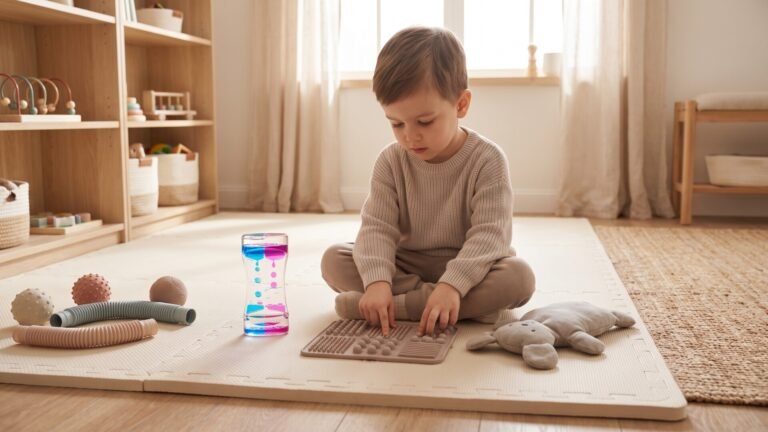
Sensory toys provide tactile, visual, auditory, or proprioceptive input that can help calm or engage the nervous system. Here’s how they work:
1. Calming Overstimulation
- When a child feels anxious or overstimulated, deep touch or repetitive motion can activate the parasympathetic nervous system, reducing stress.
- Toys like weighted stuffed animals, stress balls, or textured fidgets provide consistent tactile input that feels grounding.
2. Providing Focus
- Repetitive sensory actions help children direct their attention, which can prevent emotional escalation.
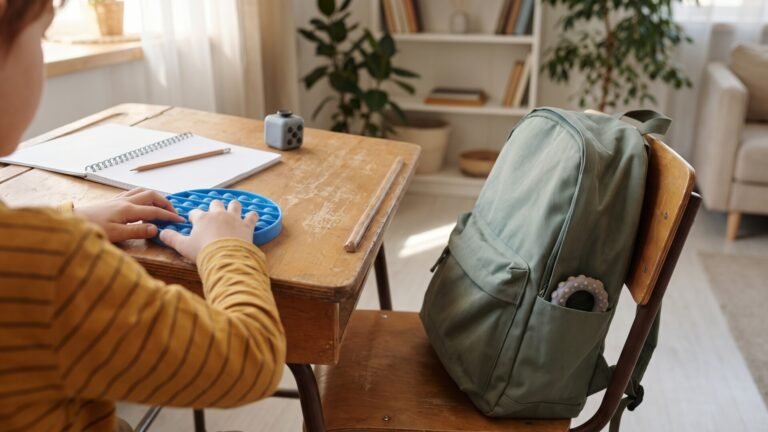
- Fidget toys, pop-it silicone toys, or textured rollers allow kids to channel excess energy into a small, safe activity, helping them stay calm in school or at home.
3. Encouraging Self-Soothing
- Some children struggle to calm down independently. Sensory toys can act as a self-soothing tool, giving them a tangible way to cope with frustration or anxiety.
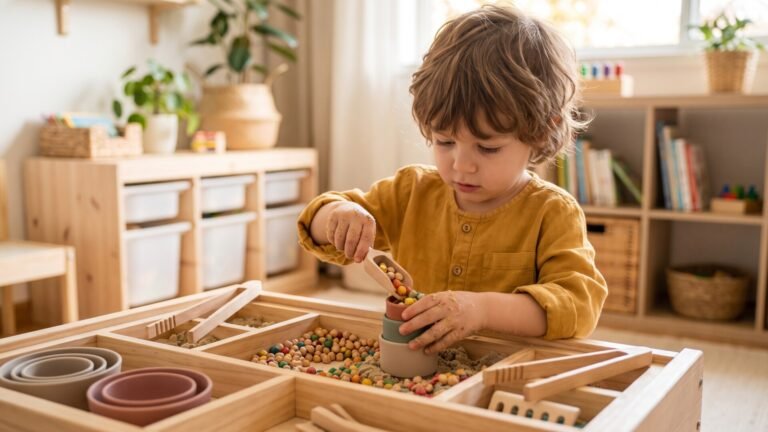
- Examples include kinetic sand, squishy balls, or soft textured toys, which can be manipulated slowly to reduce stress.
4. Promoting Predictability and Comfort
- Sensory toys offer repetitive, predictable experiences. This reliability is especially helpful for children with autism or sensory sensitivities, who may feel overwhelmed by unpredictable environments.
Types of Sensory Input and Their Benefits
Different types of sensory toys target specific systems that help regulate emotions.
1. Tactile (Touch)
Examples: Stress balls, squishy toys, textured fabric, kinetic sand
Benefits:
- Soothes anxiety through deep touch or repetitive squishing
- Provides comfort and reduces emotional intensity
- Strengthens hand and finger muscles
2. Proprioceptive (Body Awareness)
Examples: Weighted blankets, stuffed animals, resistance bands, push/pull toys
Benefits:
- Provides deep pressure input that calms the nervous system
- Helps children feel “grounded” in their bodies
- Often reduces hyperactivity or restlessness
3. Vestibular (Balance and Movement)
Examples: Rocking chairs, balance boards, swings
Benefits:
- Helps children self-regulate through movement
- Can reduce anxiety and improve attention
- Works well for kids who are over- or under-stimulated
4. Auditory (Sound)
Examples: Soft musical instruments, rain sticks, chimes
Benefits:
- Gentle sounds provide soothing feedback
- Can act as a focus tool during stressful transitions
- Helps children engage with calm auditory stimuli instead of chaotic noise
5. Visual (Sight)
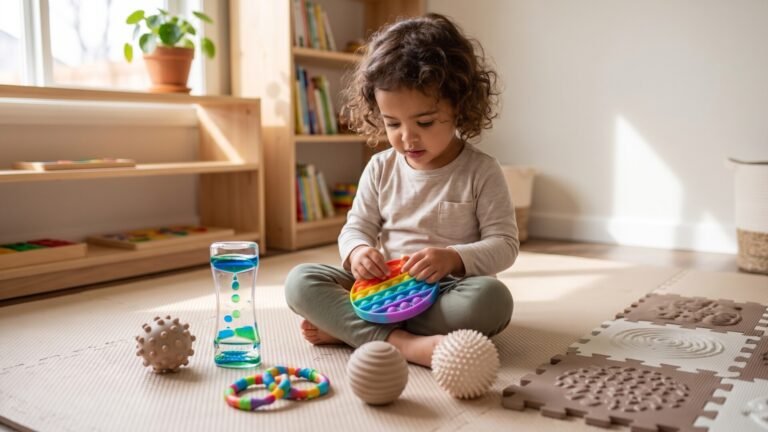
Examples: Glitter bottles, liquid motion toys, LED sensory lamps
Benefits:
- Watching movement or light patterns can calm an overstimulated child
- Offers a visual anchor for regulating emotions
- Encourages mindfulness and focus
How to Use Sensory Toys Effectively
Sensory toys are most helpful when integrated intentionally into daily routines and challenging moments.
1. Identify Your Child’s Needs
- Observe which sensory inputs calm or engage your child.
- Some children respond best to tactile input, others to movement or visual stimuli.
2. Pair Toys With Emotional Coaching
- Use sensory toys alongside language:
- “You seem frustrated. Let’s squeeze this ball together.”
- “The glitter bottle can help you calm down while we take deep breaths.”
- This helps children connect feelings to self-regulation strategies.
3. Create a Sensory Corner or Kit
- Set up a dedicated space at home or school with a variety of toys.
- Include weighted items, fidgets, tactile materials, and calming visuals.
- Children can choose what works best for them in the moment.
4. Use During Transitions
- Sensory toys are particularly useful for transitions:
- Starting school
- Moving between activities
- Waiting for appointments or travel
5. Teach Gradual Independence
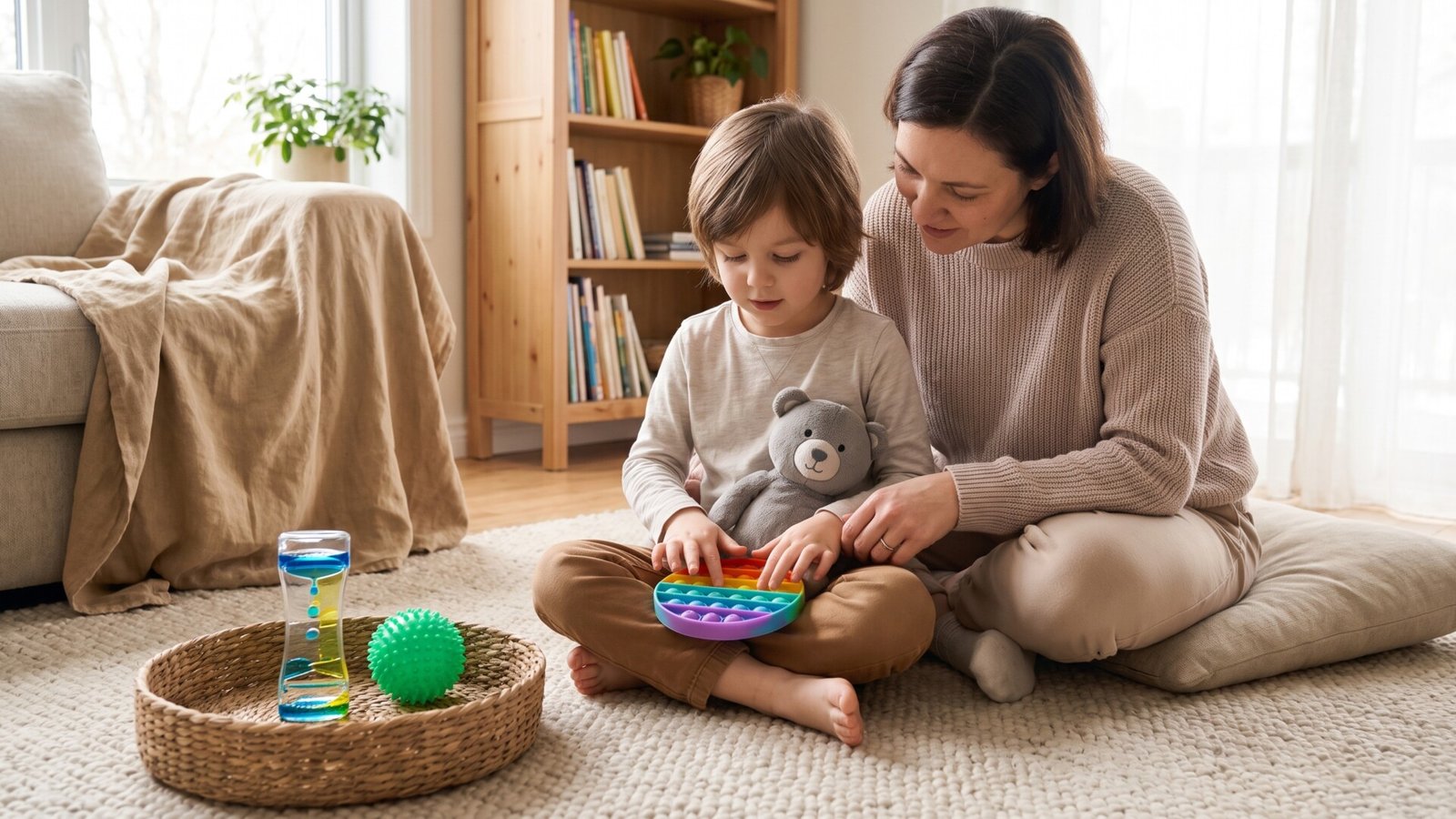
- Initially, a parent or caregiver may guide use.
- Gradually encourage the child to self-select and use toys independently for emotional regulation.
Sensory Toys for Different Ages
Toddlers (1–3 Years)
- Soft, squishy toys
- Textured balls
- Weighted plush animals
- Simple musical instruments (shakers, drums)
Preschoolers (3–5 Years)
- Kinetic sand or play dough
- Pop-it silicone toys
- Small stress balls or tactile fidget toys
- Visual toys like glitter bottles or light wands
School-Age Children (6–10 Years)
- Fidget cubes, rings, or bracelets
- Weighted lap pads or small blankets
- Liquid motion toys or calming jars
- Sensory bottles with small objects to manipulate
Older Children (10+)
- Compact fidget tools for discreet use in school
- Sensory balls or tactile tubes
- Weighted lap pads or shoulder wraps for concentration
- DIY kits for kinetic sand or slime to engage tactile senses creatively
Combining Sensory Toys With Other Emotional Regulation Strategies
While sensory toys are powerful, they work best alongside other emotional regulation techniques:
- Breathing Exercises – Pair deep breathing with tactile toys
- Mindfulness Activities – Glitter jars or visual timers encourage focus
- Movement Breaks – Rocking chairs, balance boards, or stretching
- Routine and Predictability – Incorporate toys into consistent daily schedules
- Language Coaching – Teach children to label feelings while using toys
This multi-pronged approach helps children internalize self-regulation skills for use in various situations.
Recommended Sensory Toys
Here are parent-approved, safe, and effective sensory toys to help with emotional regulation:
- Weighted Stuffed Animals or Lap Pads – Provide calming deep pressure
- Squishy Balls or Stress Toys – Simple, portable tactile options
- Kinetic Sand or Play Dough – Combines creativity with tactile input
- Pop-It Silicone Toys – Quiet, repetitive, and engaging
- Fidget Cubes, Rings, or Bracelets – Perfect for school or travel
- Glitter Bottles or Liquid Motion Toys – Visual focus to calm anxiety
- Textured Balls or Fabric Swatches – Variety of tactile experiences
DIY Sensory Toy Ideas
Parents can also create low-cost, quick DIY sensory toys:
- Rice or Bean Sensory Bags – Fill ziplock bags with rice, beans, or pasta for squishing
- Water Bottles With Glitter – Glitter in water for visual calming
- Homemade Play Dough or Slime – Tactile play combined with creativity
- Stress Balls From Balloons – Fill balloons with flour, rice, or sand for a squeezable toy
DIY options can be rotated, personalized, and are budget-friendly while still providing emotional regulation benefits.
Tips for Parents
- Observe Your Child – Not all toys work for every child; trial and error helps.
- Set Limits – Sensory toys are tools, not distractions. Pair with clear expectations.
- Rotate Toys – Keep interest high and avoid overstimulation.
- Encourage Reflection – Ask your child which toys help them feel calm or focused.
- Integrate Into Daily Routines – Morning routines, homework, or bedtime can all benefit.
Key Takeaways
- Sensory toys are valuable tools for emotional regulation.
- They provide tactile, visual, auditory, and proprioceptive input that calms, engages, and soothes.
- Combining toys with emotional coaching and mindfulness strategies maximizes benefits.
- Age-appropriate, safe, and durable toys ensure long-term use and success.
- DIY sensory toys offer budget-friendly, customizable options that children love.
With intentional use, sensory toys help children understand their emotions, self-soothe, and navigate everyday challenges. They’re not just playthings — they’re tools that empower children to develop critical emotional regulation skills.