Travel & On-the-Go Activities: Your Complete Guide to Surviving (and Enjoying) Family Travel
Every parent has that travel memory. The one that still makes you laugh—or shudder—years later.
Maybe it’s the cross-country road trip where your three-year-old asked “are we there yet?” at the end of your own driveway. Maybe it’s the airplane flight where your toddler discovered their lungs were capable of sounds you’d never heard before, at an altitude where escape was impossible. Maybe it’s simply the realization that you packed an entire suitcase of activities, and your child still spent most of the journey playing with the window shade.
Family travel is its own special category of parenting. The stakes feel higher, the resources more limited, and the margin for error much smaller. But here’s what I’ve learned after more miles with children than I can count: travel isn’t the obstacle between you and your destination. Travel is part of the adventure itself. The right preparation doesn’t just prevent meltdowns—it creates memories that outlast any souvenir.
This guide is organized by the specific travel situations you’ll actually face. Whether you’re buckling in for a long car ride, buckling up for takeoff, or simply trying to keep a preschooler happy in a restaurant booth, you’ll find ideas here that work for real families with real budgets and real limits on patience.
Return to the main Play & Activity Ideas Hub
Quiet Activities for Long Car Rides
Keeping Everyone Happy Between Rest Stops
The family road trip is a beloved tradition for good reason. It’s flexible, affordable compared to air travel, and filled with potential for spontaneous adventures. It’s also hours and hours of confined togetherness, which tests family dynamics in ways nothing else quite does.
The key to successful car rides isn’t bringing enough activities to fill every minute. That’s impossible anyway. The key is bringing the right activities—ones that respect the unique constraints of car travel while actually engaging children for meaningful stretches.
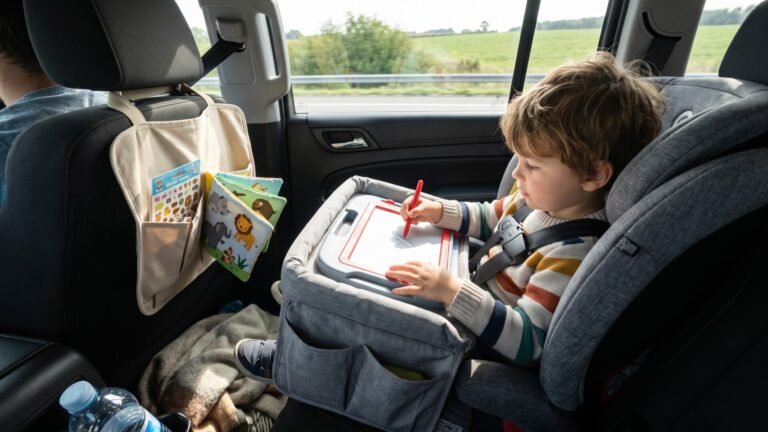
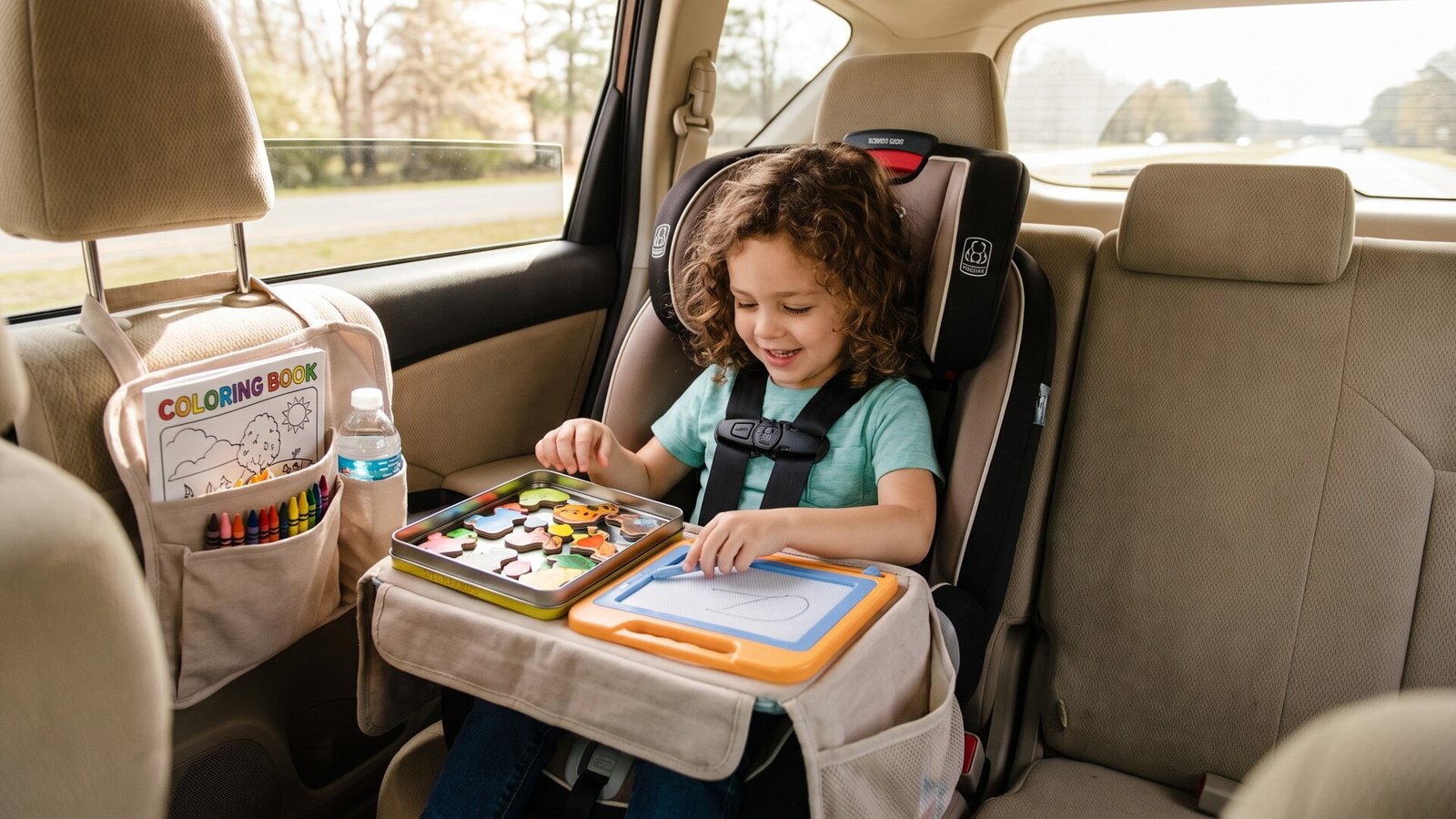
Magnetic play deserves its reputation as the MVP of car activities. Unlike loose pieces that will inevitably end up on the floorboards, magnetic toys stay where they’re placed. Magnetic drawing boards give children the satisfaction of creating without any loose parts to lose. Magnetic puzzle books contain everything within their pages. And simple magnetic dress-up dolls or vehicles let children change outfits and configurations to their hearts’ content, all without creating the chaos that would inevitably result from actual dolls with actual tiny clothes.
Audiobooks transform car time from something to endure into something to anticipate. There’s magic in a shared story that fills the car and gives everyone the same experience to discuss at rest stops. Libraries offer free audiobook apps that work with your library card. Services like Audible have extensive children’s sections, and many classic books are available free through sources like Librivox. The best part? When you arrive at your destination, you’re all in the same narrative world together, which gives you built-in conversation starters for the whole trip.
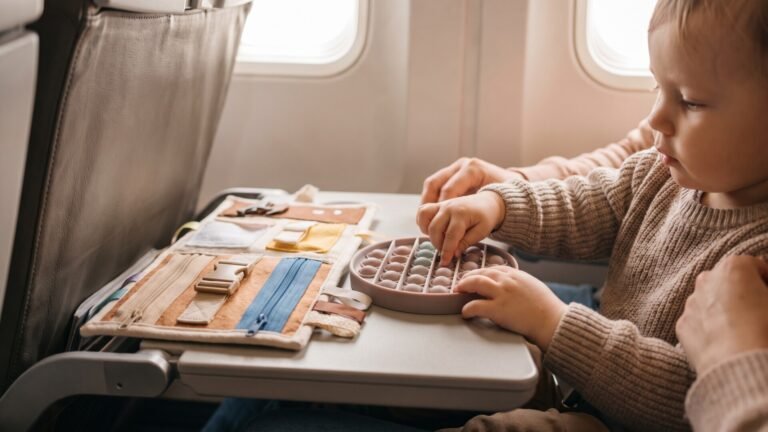
Sensory tools that stay put work beautifully when selected thoughtfully. Thinking putty or therapy putty provides quiet hand occupation without rolling away. Small fidget toys selected specifically for car use maintain novelty when they’re only available during travel. A small lap tray or cookie sheet with raised edges creates a stable surface for whatever activity you’ve chosen, and if it’s magnetic, that cookie sheet becomes a play surface for magnetic toys.
The element of surprise matters more than the specific item. Wrapping small activities in tissue paper or putting them in opaque bags creates curiosity that becomes an activity in itself. A simple rule—”you can open one new thing at each rest stop” or “every hour you get something new”—spreads engagement across the whole journey. Dollar stores and party favor sections are gold mines for small, novel items that don’t cost much but feel special when presented with ceremony.
Snacks deserve strategic consideration because they’re not just food—they’re activities that buy time. Novel presentation matters more than the snacks themselves. A muffin tin with different compartments, a bento box with tiny treats divided into sections, or snacks that require some effort to eat (within reason) extend the engagement window significantly. Freeze grapes or yogurt tubes to serve as cold treats that thaw by lunchtime. Pack snacks in small containers that require opening, creating mini-challenges throughout the journey.
Rest stops are opportunities, not interruptions. A twenty-minute break to run, jump, and release energy can buy two hours of peaceful driving. Look for rest areas with open space for movement. Pack a small ball or frisbee in an easily accessible bag. And remember that sometimes the best activity at a rest stop is simply lying in the grass watching clouds—for parents and children alike.
Check out our in depth article on Quiet Activities for Long Car Rides
Airplane Activities for Toddlers
Surviving Takeoff, Flight, and Landing with Sanity Intact
Air travel with toddlers adds constraints that car travel doesn’t. You can’t pull over. Space is measured in inches. And other passengers are counting on your child’s relative quiet, which adds a layer of pressure that can make even experienced parents anxious.
The good news is that thousands of families do this successfully every day. The secret isn’t perfect children or endless screens—it’s preparation that accounts for the unique demands of flight.
The element of surprise works even better on airplanes than in cars because the stakes are higher. Wrapping small activities in tissue paper or putting them in opaque bags creates anticipation and extends engagement. Consider wrapping activities in layers—first the tissue paper, then a small box inside, then the actual activity—so the unwrapping itself becomes part of the entertainment.
Stickers and sticker books earn their reputation as airplane heroes for good reason. Reusable sticker books let kids place and reposition without losing stickiness, providing endless variations on the same activity. Window clings turn airplane windows into canvases, and the process of applying and removing them occupies fine motor skills productively. Sticker by number books give older toddlers satisfying creative projects without any loose materials.
Water-reveal activity books deserve a special place in every airplane bag. These contain special pages that show colors when wet with a water pen. They’re reusable once dry, completely mess-free, and endlessly satisfying for young children. The pens are designed not to leak, and there’s no liquid to spill—just clear water that feels like magic when color appears.
Snacks with staying power matter even more on planes than in cars because you can’t pull over for reinforcements. Novel presentation matters—snacks in small containers with compartments, snacks on sticks (within safety guidelines), snacks that require peeling or opening. Freeze-dried fruits and vegetables offer satisfying crunch without mess. And remember that the process of eating can itself be an activity when you pack things that require attention.
Screen time as backup, not primary plan, is a philosophy that serves many families well. Tablets loaded with favorite shows and downloaded for offline viewing provide a reliable last resort when all else fails. But children who spend the whole flight staring at screens miss the experience of flight itself—the clouds outside the window, the mystery of takeoff, the wonder of seeing the world from above. Save screens for when they’re truly needed.
Prepare for the pressure changes that cause ear pain during takeoff and landing. For babies, nursing or bottle feeding provides the sucking and swallowing that helps equalize pressure. For toddlers, sippy cups, lollipops, or snacks that require sucking work beautifully. Explain what’s happening before it happens—”your ears might feel funny, but here’s what we’ll do to help”—so children understand the sensation when it arrives.
Find out more in our Airplane Activities for Toddlers breakdown.
Best Travel Toys for Preschoolers
What Actually Earns Its Place in Your Suitcase
Not all toys are created equal when it comes to travel. Some that children love at home become frustrating on the road because of missing pieces, complicated setups, or simply the wrong context. Others reveal hidden value in travel settings, engaging children for hours in ways they never do at home.
Understanding what makes a toy work for travel helps you pack smarter, not harder.
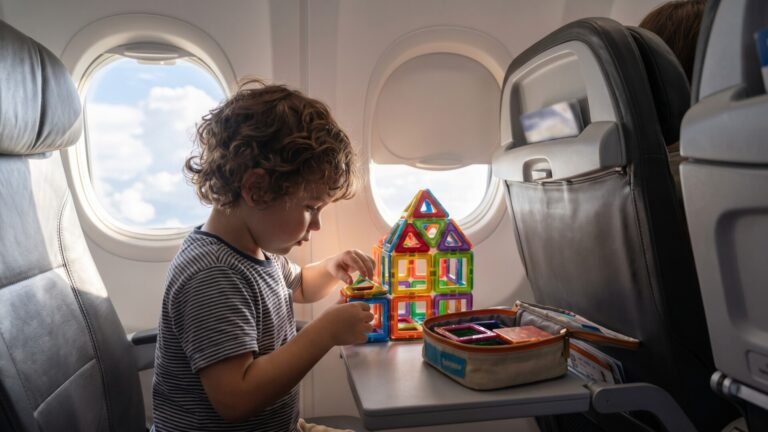
Magnetic building sets that connect in multiple ways travel well and encourage open-ended creation. Look for sets with strong magnets so creations survive bumps and jostles. The best ones work on magnetic surfaces (like that cookie sheet you packed) and also stand alone. Sets with varied shapes and colors support more complex creations than simple sets with only one or two shapes.
Wikki Stix or similar waxed yarn deserve space in every travel bag. They stick to windows, trays, and themselves without adhesives or residue. They’re endlessly reusable, completely mess-free, and engage fine motor skills naturally. Children can create shapes, letters, animals, or abstract designs, then squish them and start over. One small package provides hundreds of hours of potential engagement.
Search-and-find books like the classic Where’s Waldo? or I Spy series provide solo engagement that doesn’t require reading ability. The best ones have multiple layers of challenge—finding specific items, counting occurrences, tracking characters across pages. Older children can create their own search challenges for siblings, extending the activity further. Board book versions exist for younger children, with simpler searches and durable pages.
Small dolls or action figures with minimal accessories travel better than elaborate sets with many pieces. A single small figure can star in countless imagined adventures, especially when combined with other travel items—a napkin becomes a cape, a seatback tray becomes a stage, a window becomes a portal to imaginary worlds. Set clear expectations about how many pieces are coming and where they must stay.
Compact puzzles exist in forms that work beautifully for travel. Magnetic puzzles contain all pieces within their pages. Puzzle tubes hold small puzzles in portable containers. Some puzzles come as books with pieces that store in attached pockets. The satisfaction of completing a puzzle translates perfectly to travel contexts, providing natural stopping points and feelings of accomplishment.
Flashlight fun works for older preschoolers who can be trusted with the responsibility. A small flashlight transforms hotel rooms and evening travel into adventure zones. Add some translucent colored shapes for shadow play and you’ve created an entirely new category of entertainment. The flashlight itself becomes a toy, a tool, and a comfort object all in one.
Dive deeper into the Best Travel Toys for Preschoolers
Screen-Free Road Trip Ideas
When You Want Options Beyond the Tablet
Many families choose to limit screen time during travel, and others simply want alternatives to offer alongside screens. Either way, having a mental library of screen-free options makes road trips richer and more varied.
The best screen-free activities share common qualities: they don’t create mess, they don’t require constant adult facilitation, and they can be paused and resumed easily.
Classic car games have entertained generations of travelers for good reason. The license plate game—finding plates from different states—works anywhere and teaches geography naturally. The alphabet game—finding each letter in order on signs and billboards—builds observation skills and keeps eyes engaged with the passing landscape. I Spy with something specific (“I spy something that starts with B”) works for all ages and requires no materials at all.
Audiobooks and story podcasts deserve mention again because they’re so effective. The best story podcasts for children feature single episodes that stand alone, so you can listen for exactly as long as engagement lasts. Many offer complete stories in fifteen to twenty minute segments, perfect for breaking up long drives. And the shared experience of a compelling story creates family bonding that screens rarely match.
Music with participation turns the car into a concert. Children’s music with call-and-response elements, simple hand motions that work in car seats, or songs that invite new verses keep everyone engaged. Create playlists ahead of time that include family favorites, silly songs, and occasional grown-up music that children learn to appreciate through exposure.
Oral storytelling is a skill that improves with practice. Simple prompts work best: “Tell me about a time you were really brave” or “Let’s make up a story about a squirrel who learned to fly.” Taking turns adding sentences creates collaborative stories that go in unexpected directions. The best part is that this activity requires nothing but voices and imaginations.
Travel journals give older preschoolers something to anticipate at rest stops and destinations. A small notebook and a few crayons or colored pencils let children document their journey through drawings and dictated observations. Stopping to draw a interesting cloud, a funny sign, or a memorable rest stop creates pauses that break up driving stretches. At the end of the trip, the journal becomes a treasured souvenir.
Mapping the journey engages children in the experience of travel itself. Show them the route before you leave. Let them track progress on a paper map or in a mapping app. Point out landmarks and explain what makes each place interesting. Children who understand where they’re going and why feel more invested in the journey, and less like passive passengers being transported to unknown destinations.
Here’s our take on the best Screen-Free Road Trip Ideas
Mess-Free Travel Crafts
Creating Without Causing Chaos
Some children genuinely want to create, not just play. Their best travel moments come from making things, expressing themselves, and leaving behind evidence of their imagination. But travel crafts face unique constraints—no running water, limited space, and the need to contain everything within a small area.
Mess-free options make creating possible without driving parents crazy.
Water-reveal activity books were mentioned earlier, but they deserve expanded attention. Different versions exist for different ages and interests—some focus on letters and numbers, others on animals or scenes, still others on mazes and puzzles. The magic of color appearing from clear water never gets old, and the books dry ready for reuse within hours. One book can provide dozens of engagement sessions across a whole trip.
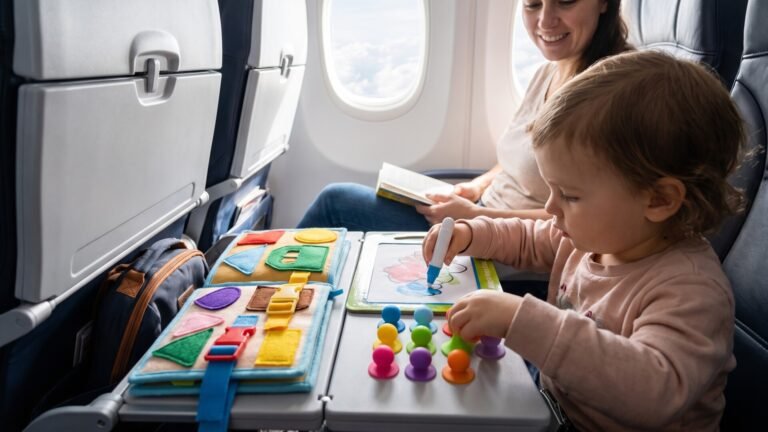
Color Wonder products from Crayola and similar brands use special paper that only shows color when used with their specific markers. The markers won’t mark on skin, furniture, or clothing, which eliminates the anxiety that comes with traditional art supplies. The paper is contained, the markers are contained, and the whole setup can be used in car seats, airplane trays, or restaurant booths with minimal risk.
Sticker mosaics and paint-by-sticker books give older children satisfying creative projects without any liquid or loose materials. The stickers are precut shapes that fit together to create images, with numbered guides showing where each goes. The process requires focus and fine motor control, and the finished product provides genuine satisfaction. Books come in varying complexity levels, so you can match them to your child’s abilities.
Window clings turn any window into an art canvas. Unlike stickers, they don’t lose stickiness and can be repositioned endlessly. Sets with multiple themes—animals, vehicles, letters, seasonal images—let children create scenes that change throughout the trip. The clings store flat in a folder or bag, taking almost no space while providing hours of potential engagement.
Tape-based crafts work when you have a surface to work on. Painter’s tape (which removes easily from most surfaces) can create roads for small cars, geometric designs, or simply be shaped into sculptures. Add a few sheets of paper and you have the materials for tape resist art—placing tape on paper, coloring over everything, and removing tape to reveal white lines. The tape itself becomes the craft material.
Pipe cleaners and craft stems bend into endless shapes without creating mess. A small bundle in multiple colors provides materials for creating animals, jewelry, sculptures, or abstract designs. They can be twisted together, separated, and reused infinitely. Add a few plastic beads (contained in a small bag or container) and you have jewelry-making supplies that travel flat and create minimal mess.
Felt playsets contain everything within a small book or folder. Sets with felt backgrounds and movable felt pieces let children create scenes and stories without any loose pieces that roll away. The felt naturally sticks to itself, so creations stay where they’re placed until deliberately changed. Sets exist for countless themes—farms, oceans, space, fairy tales—and new pieces can be added from home with simple felt scraps.
Explore more Mess-Free Travel Crafts
Bringing It All Together: Your Travel Activity Strategy
After all these specific ideas, you might feel overwhelmed rather than prepared. That’s normal. The key isn’t doing everything—it’s doing what works for your family, your children, and your specific trip.
Here’s a simple framework for thinking about travel activities:
The 80/20 rule applies to travel preparation. Eighty percent of your success will come from twenty percent of your activities. The specific twenty percent varies by child, but for most families it includes magnetic play, audiobooks, and strategic snacks. Master those three categories before worrying about anything else.
Novelty matters more than quantity. Ten activities your child has never seen will engage longer than twenty familiar favorites. Shop dollar stores, party favor sections, and Target’s dollar spot for inexpensive new items. Wrap them individually and reveal them strategically throughout the journey.
Involve children in preparation when developmentally appropriate. Let them choose some activities from options you provide. Pack their own small bag with chosen items. Explain the plan for when different activities will appear. Children who understand what’s happening feel more in control and cooperate more readily.
Build in flexibility because nothing goes exactly as planned. The activity you were sure would occupy two hours might last two minutes. The toy your child ignored at home might become the trip’s obsession. Have backup options, but also have reasonable expectations. Some travel time will be hard, and that’s okay.
Remember what travel is really about. The goal isn’t perfect, meltdown-free journeys. The goal is reaching your destination together, with relationships intact and some good memories mixed in with the challenging ones. The activities that fail become family stories. The moments that work become family traditions.
That about wraps it up for our take on travel activities you can set up for your kid, but there’s plenty more read world situations you’ll find yourself in. That’s what our Play & Activity Ideas hub was built for. Go check it our.