Montessori Language Toys
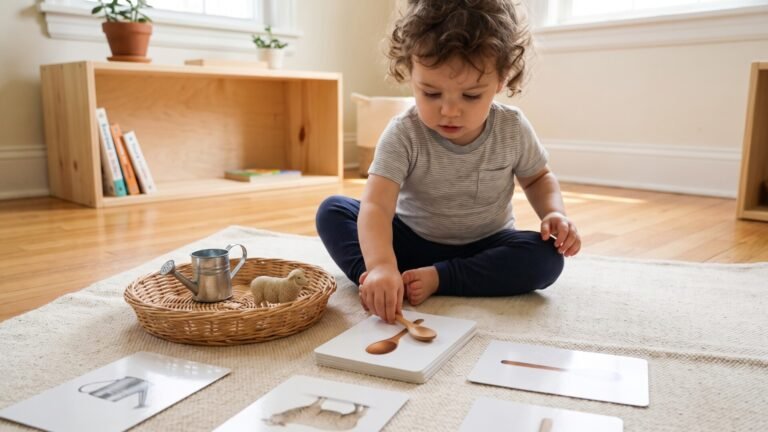
Language is the foundation of learning, communication, and cognitive development. Montessori language toys help children explore, experiment, and internalize language naturally, using hands-on materials rather than rote memorization or electronic instruction. These toys are designed to support listening, speaking, reading, and writing skills at a pace suited to each child’s developmental stage.
Montessori language toys go beyond simple alphabet games. They combine tactile experiences, phonemic awareness, and symbolic understanding, allowing children to connect sounds, words, and meaning in an intuitive and joyful way. This sub-hub provides a guide to age-appropriate Montessori language toys, highlighting materials that boost literacy, vocabulary, and confidence.
Why Montessori Language Toys Are Important
Montessori language toys are designed to mirror natural language acquisition. Children learn to speak and understand before they read and write, and these toys provide concrete, hands-on experiences that link sounds, words, and symbols.
Benefits of Montessori language toys include:
- Vocabulary expansion: Object-based toys and word cards introduce new words in meaningful contexts.
- Phonemic awareness: Toys that focus on initial sounds, rhymes, and word families prepare children for reading.
- Fine motor skill development: Tracing letters and manipulating tiles strengthen hand-eye coordination and pencil control.
- Reading readiness: Moveable alphabets, letter tracing, and word matching build confidence before formal literacy instruction.
- Independent learning: Self-correcting materials allow children to explore without constant adult guidance.
By integrating play with structured learning, Montessori language toys encourage children to discover the joy of words and communication.
Core Types of Montessori Language Toys
Montessori language toys can be divided into several categories based on skill development and learning progression:
1. Sound and Listening Toys
Sound-based toys help children discriminate, recognize, and reproduce sounds, a foundational skill for language development.
Examples of Sound & Listening Toys:
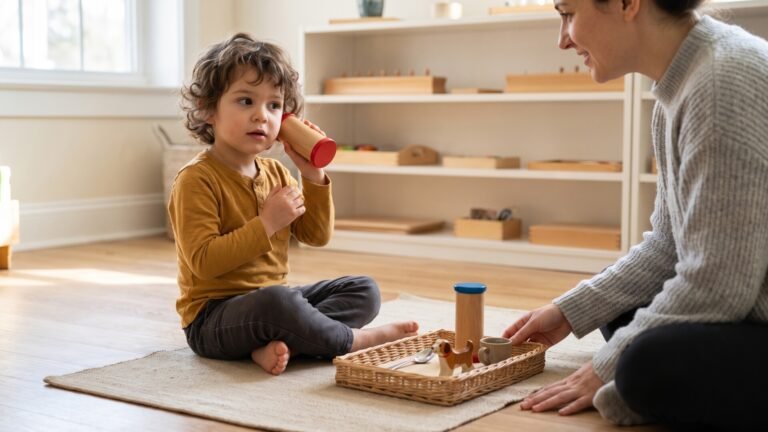
- Sound cylinders: Pairs of containers with varying contents for matching by sound.
- Rhyming cards and objects: Match words or objects that rhyme to strengthen auditory discrimination.
- Musical instruments: Small bells, shakers, or xylophones to develop pitch, rhythm, and listening skills.
- Environmental sound boxes: Toys that replicate everyday sounds, like animals or vehicles.
These toys are excellent for toddlers and preschoolers to train the ear and focus attention, preparing them for later reading and spelling.
2. Letter and Phonics Toys
Montessori introduces sounds before letters, and toys that emphasize this principle help children understand the link between phonemes and written symbols.
Examples of Letter & Phonics Toys:
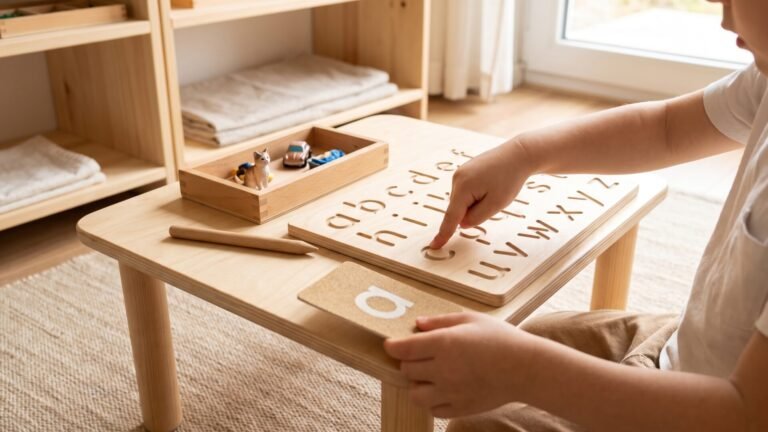
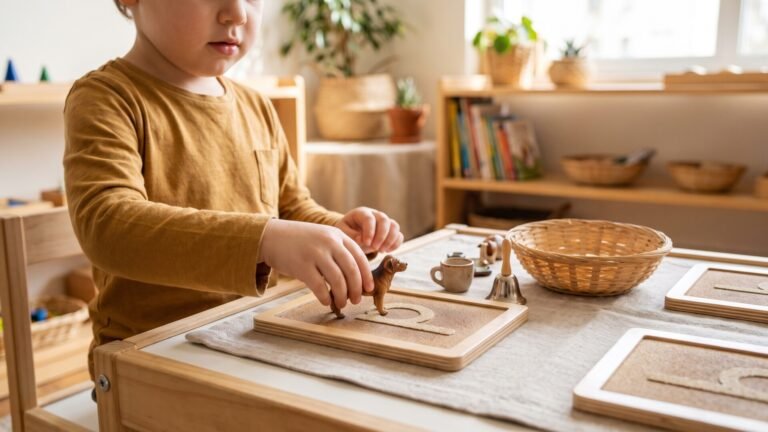
- Sandpaper letters: Tactile letters that children trace with fingers while saying the sound.
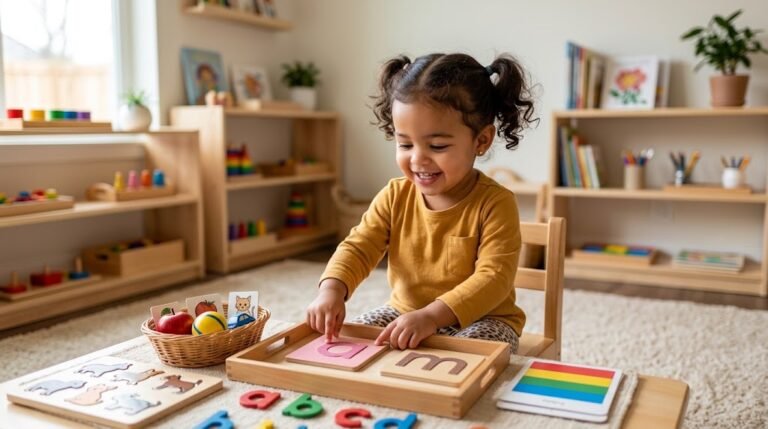
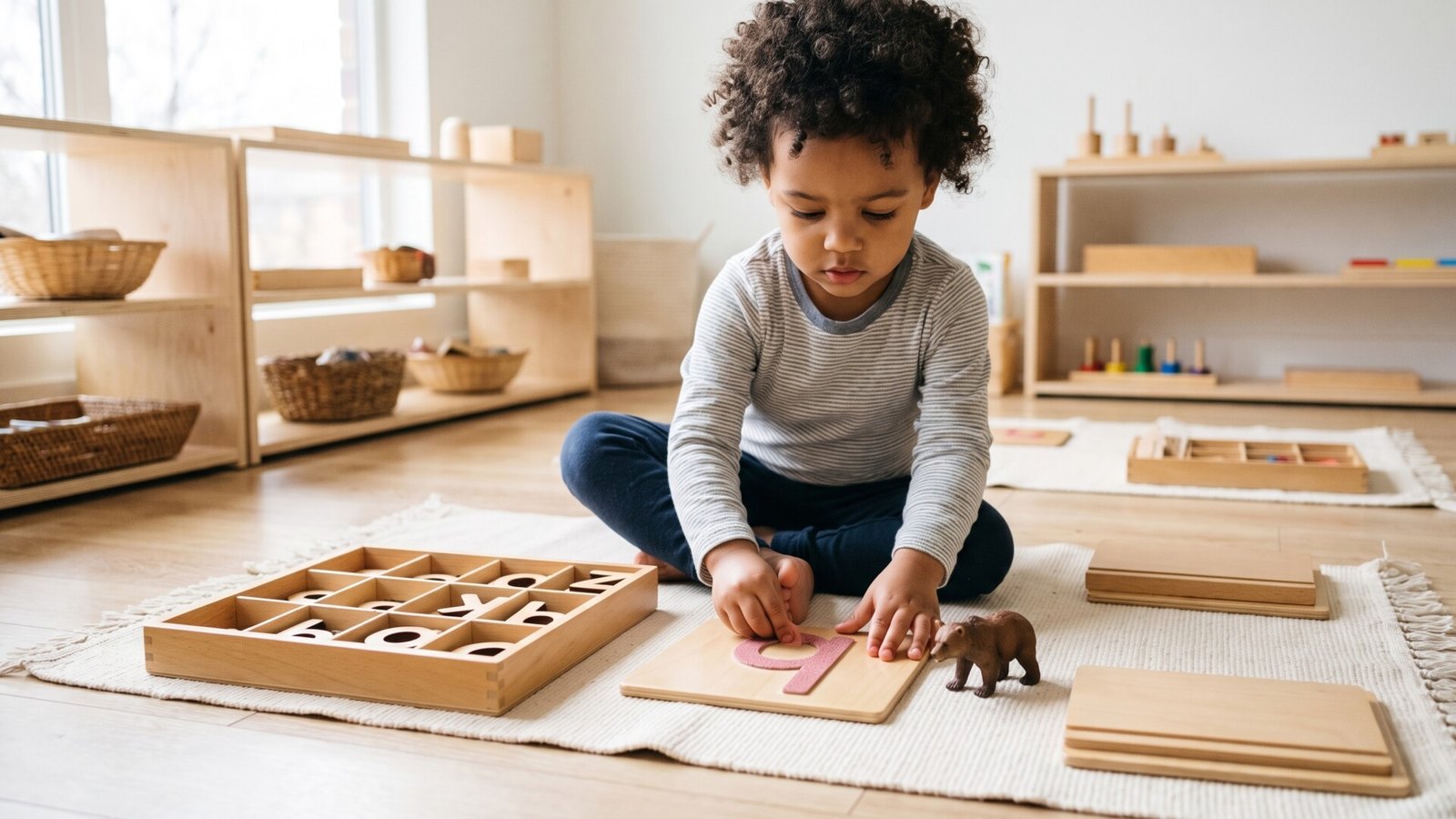
- Moveable alphabet sets: Tiles representing letters for building words and experimenting with spelling.
- Phonetic sound cards: Cards that pair objects with initial sounds, ideal for early reading practice.
- Letter puzzles: Wooden or magnetic puzzles for hands-on letter recognition.
These materials build a solid foundation for reading and writing, focusing on tactile, auditory, and visual integration.
3. Vocabulary and Object-Based Toys
Concrete objects are key in Montessori education. Language toys that involve real items help children connect words with meaning.
Examples of Vocabulary & Object Toys:
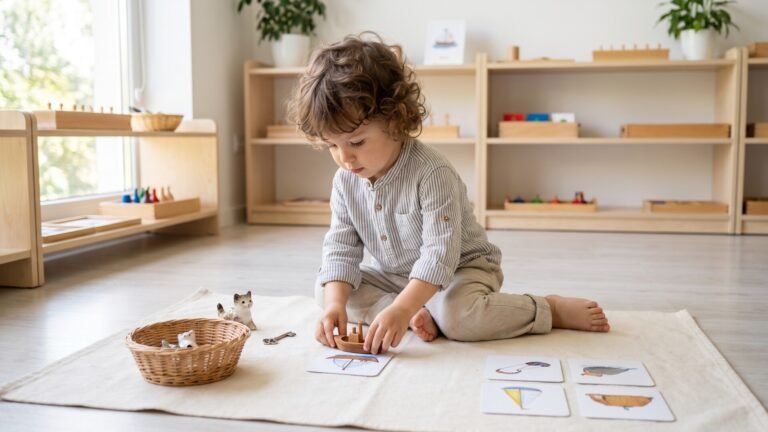
- Object naming sets: Everyday items, miniature animals, or household replicas to learn new words.
- Matching games: Match miniature objects with corresponding picture cards.
- Categorization sets: Toys that allow children to sort objects into groups (animals, food, tools), reinforcing vocabulary.
- Storytelling props: Small figures or puppets for creating narratives and enhancing expressive language.
These toys enhance conceptual understanding and encourage children to use words in meaningful ways.
4. Writing and Composition Toys
Writing toys in Montessori classrooms are designed for hands-on practice and self-expression, gradually leading to literacy.
Examples of Writing & Composition Toys:
- Moveable alphabet storytelling: Children form words and sentences with letter tiles.
- Chalkboards or whiteboards: For practicing letters, words, and simple sentences.
- Tracing cards and mats: Letters, words, or simple sentences to trace with fingers or pens.
- Story-building kits: Toys that combine word cards, images, or objects for creating narratives.
These materials encourage fine motor development and early composition skills, allowing children to explore language without pressure.
5. Reading-Readiness Toys
Reading-readiness toys bridge the gap between phonemic awareness and early literacy.
Examples of Reading-Readiness Toys:
- Object-to-word matching trays: Pair words with corresponding objects to link symbols and meaning.
- Simple phonics books and cards: Repetitive text and visual cues for beginning readers.
- Word-building sets: Toys that allow children to experiment with spelling and sentence formation.
- Early storybooks with movable elements: Encourage comprehension and interaction.
These tools foster confidence, decoding skills, and word recognition, preparing children for independent reading.
Montessori Language Toys by Age Group
Toddlers (1–3 Years)
Toddlers benefit from listening, naming, and early phonemic exposure. Toys at this stage focus on vocabulary building and auditory awareness.
Recommended toys:
- Sound cylinders or matching bells
- Object naming sets
- Simple rhyming cards or songs
- High-contrast image cards
- Musical shakers and rhythm instruments
Goal: Build early vocabulary, listening skills, and sound recognition in a playful, engaging way.
Preschoolers (3–6 Years)
Preschoolers are ready to combine sounds, letters, and words, exploring basic reading and writing concepts.
Recommended toys:
- Sandpaper letters for tracing and sound recognition
- Moveable alphabet for word formation
- Phonetic cards and rhyming games
- Letter and word puzzles
- Storytelling props with puppets or figures
Goal: Develop reading readiness, phonemic awareness, and expressive language skills.
Early Elementary (6–9 Years)
Older children can explore more complex language structures, grammar, and storytelling.
Recommended toys:
- Grammar symbol sets for sentence construction
- Word-building kits and advanced puzzles
- Story creation sets with picture prompts
- Early chapter books with interactive elements
- Creative writing trays with movable word cards
Goal: Strengthen fluency, comprehension, and writing skills, supporting literacy and communication.
Creating a Montessori Language Area at Home
A prepared environment makes it easy for children to independently engage with language toys.
Tips for setting up a Montessori language area:
- Use low shelves to make toys accessible.
- Organize materials in trays or baskets by skill (sound, letters, vocabulary).
- Rotate toys to maintain novelty and focus.
- Include quiet, distraction-free spaces for concentration.
- Incorporate real-world objects alongside letters and words for meaningful connections.
A thoughtfully arranged language area encourages repetition, self-correction, and independent learning.
Montessori Language Toys vs Traditional Language Toys
Montessori language toys emphasize process and discovery, while conventional language toys often focus on pre-packaged learning outcomes.
Montessori Language Toys:
- Hands-on, tactile, and interactive
- Self-correcting for independent learning
- Emphasize sound-symbol relationships
- Open-ended, adaptable to multiple activities
Traditional Language Toys:
- Often screen-based or result-oriented
- Limited scope for exploration
- Focus on memorization rather than understanding
- Pre-determined outcomes with little flexibility
Montessori toys encourage active learning and critical thinking, rather than passive response.
Choosing Montessori Language Toys as Gifts
When selecting Montessori language toys:
- Choose open-ended materials that grow with the child.
- Prefer natural and durable materials like wood, metal, or high-quality cardboard.
- Avoid electronic or overly prescriptive toys.
- Look for toys that integrate multiple skills: sound, letters, vocabulary, and creative expression.
- Include a variety of tactile, auditory, and visual experiences.
High-quality Montessori language toys are used repeatedly across age groups, providing long-term educational value.
This sub-hub naturally links to:
- Montessori Language Games (activities and skills focus)
- Montessori Activities for Kids (cross-category integration)
- Montessori Toys for Preschoolers & Early Elementary (age-specific recommendations)