7 Safe Sensory Toys for Toddlers Who Chew
If you’ve ever lived with a toddler who loves to chew on everything — fingers, furniture, toys, shirts, literally anything within arm’s reach — you already know it’s both hilarious and, honestly, a little worrisome. Chewing is one of those totally normal toddler behaviors: it helps soothe gums, explore textures, and make sense of the world. But when every object becomes a teething snack, it’s smart to have a few safe sensory toys built for chomping.
This article is your comprehensive, easy‑to‑read guide to the best sensory chew toys for toddlers — the ones you’ll actually reach for first when curious little hands latch onto them. I’m not here to preach or nerd out in complicated terms. I’ll give you straight talk about which toys work, why they work, what to look for when you’re buying, and where you can find them (with affiliate links you can use if you want to support the site without paying extra).
You’ll walk away knowing:
- What safe chewing toys are worth it
- How chewing supports sensory and oral development
- Which materials to trust (and which to avoid)
- And how to integrate chewing toys into everyday play
Grab a cup of coffee (or cold tea — no judgment), and let’s get into it.
Why Chewing Matters for Toddlers
Before we dive into the toy picks, let’s talk about why chewing is a big deal for toddlers. Chewing isn’t just about teething. When toddlers chew:
- They regulate sensory input — chewing can calm an overwhelmed nervous system.
- They strengthen jaw muscles and oral motor control — stuff that supports speech development later.
- They explore texture and pressure — which is a core part of sensory learning.
- They satisfy oral curiosity — because toddlers love mouths as much as they love exploration.
The tricky part? Toddlers don’t discriminate between a safe chew toy and that weird corner of the coffee table. So it’s our job to give them approved, sturdy, washable, and non‑toxic objects that can handle drool, bite marks, and repeated chewing without splitting, cracking, or becoming a hazard.
A good chewing toy is:
- Non‑toxic and BPA‑free
- Easy to clean (dishwasher safe is a huge bonus)
- Soft or flexible but durable
- Textured to engage the mouth and fingers
- Sized so it can’t be swallowed or lodged in the throat
Got all that? Cool — let’s talk toys.
1. Silicone Teething Rings with Textured Ridges
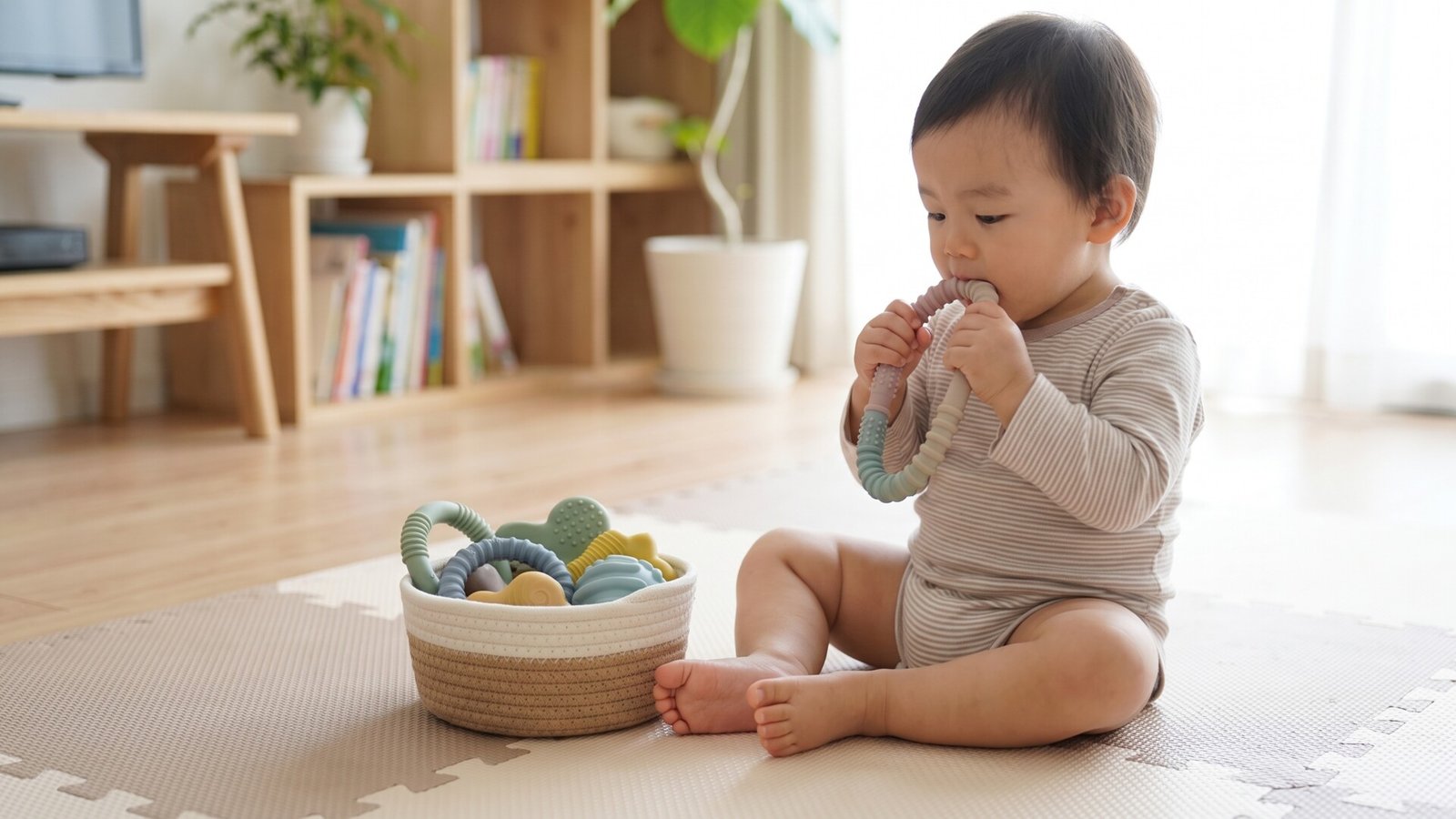
If your toddler is dealing with gums that feel like sandpaper, a textured silicone teething ring is a simple but powerful first pick. These aren’t the boring rings of the past — modern silicone options come in shapes, colors, and patterns that invite chewing and play.
The appeal here is straightforward: the soft silicone gives just enough pressure against tender gums, and the textured ridges are great for little mouths to gnaw on from different angles.
Especially at ages 12–30 months, teething rings can double as:
- Hand‑eye coordination tools
- Sensory exploration devices
- Comfort objects during big emotions
Pro tip: Some teething rings are flexible enough to bend into different shapes, which helps toddlers explore how the texture feels from different angles.
If you’re shopping for one that’s durable, dishwasher‑safe, and easy to grip with tiny hands, this is a great first choice.
2. Chewable Sensory Necklaces & Wearable Chews
Here’s a lifesaver for parents and caregivers: wearable sensory chew toys. These are silicone pendants on a breakaway cord you wear around your neck. The beauty of these is that toddlers have them right there where they need them — without rummaging through the toy bin every time.
These are especially great when:
- You’re out and about (doctor’s appointments, grocery runs)
- Your toddler chews on shirts or sleeves
- Nap transitions get rough
Wearable chews are usually made from food‑grade silicone and come in designs that look like stylish pendants — not toys that scream “baby stuff.” If you’re into clean, modern looks that don’t clash with your wardrobe, these are solid.
Many even have:
- Multiple textures
- Different bite zones
- Easy‑to‑clean designs
Just always make sure the necklace has a safety breakaway clasp so it disconnects if pulled forcefully — that’s a non‑negotiable safety feature.
3. Chewable Pencil‑Like Sensory Sticks
Don’t laugh — these are one of my personal favorites. Chewable sensory sticks look a little like thick silicone markers or pencils, but they’re designed to be bitten, gnawed, and tugged at with baby teeth and gums. Since they’re long and easy to grasp, most toddlers instinctively figure out how to hold them and use them right away.
These are especially awesome for kids who:
- Like to chew constantly throughout the day
- Need something versatile to flip, bite, and shake
- Love toys that encourage motion and exploration
The elongated shape means you can:
- Stick one end in a cup or holder
- Let your toddler chew while sitting
- Use them during sensory bins or tabletop play
The texture is usually bumpy enough to soothe gums but soft enough to prevent injury. These often come in multi‑packs, so you can leave them in playrooms, cars, diaper bags, and strollers — all at once.
4. Sensory Chew Balls
Balls are the OG toddlers’ toy, and when you combine the simplicity of a ball with chewable silicone, you get a winner. Sensory chew balls often have raised bumps or ridges that feel great under little gums, and the round shape makes them fun to grip, roll, and chew from all angles.
Chew balls score big on:
- Gross motor engagement — roll it, throw it, chase it
- Fine motor skills — grasping and holding
- Sensory exploration — different textures and pressures
They’re a little more active than flat chews, and toddlers tend to discover them quickly. Chew balls are especially good if your kid is already into crawling, cruising, or walking — they can chase the ball and bite it.
Look for options that are:
- Soft but sturdy
- BPA‑free and dishwasher safe
- Sized large enough to prevent choking risk
One of the best parts? You’ll often find chew balls in multipacks or sets, so you can leave extras in different play zones.
5. Silicone Puzzle Piece Chews
This one’s for the explorers — kids who like both chewing and figuring out a little puzzle. Silicone puzzle piece chews are big chunky pieces that fit together like giant jigsaw parts. They’re soft enough to chew but structured enough to snap together, take apart, and bite again.
What I like about puzzle piece chews:
- They double as a building toy and a gum soother.
- Toddlers feel a sense of accomplishment as they learn to fit pieces together.
- The edges and indents give lots of different chew textures.
Plus, because they click together, you can make simple shapes and patterns with your toddler. That adds a language and logic play angle on top of oral sensory engagement — two birds with one silicone stone.
Just be sure the puzzle pieces are:
- Big enough to avoid swallowing hazards
- Made from high‑quality food‑grade silicone
- Easy to clean (most fit in the top rack of a dishwasher)
6. Teething Rings with Soft Ribbons & Tags
Some toddlers don’t just chew — they love fabric. If your kiddo is a textile explorer (which is most toddlers, let’s be honest), teething rings with soft ribbons or tags are like candy for little fingertips and mouths.
These usually have:
- A silicone bite ring
- Soft ribbons or tags attached
- Different textures and shapes to explore
The combination of:
- Soft ribbon
- Chewy silicone
- Tag flaps
- Bright colors
…makes these go‑to favorites for teething, tactile play, and oral stimulation.
These are nice because toddlers can:
- Chew the silicone ring
- Tug at ribbons
- Flutter tags between fingers
- Carry the toy easily
Many of these are lightweight and portable, so they’re a good choice for day trips, waiting rooms, and stroller rides.
7. Weighted Chew Strips & Sensory Bands
Now here’s something you might not have thought of: weighted chew strips and stretchy sensory bands. These aren’t your traditional chew toys, but for toddlers who chew everything all the time, these offer a bigger sensory experience.
Weighted chew strips are usually:
- Soft, flexible strips
- Slightly heavier or with a bit of resistance
- Great for providing calming pressure through the mouth
Stretchy sensory bands are often:
- Made from strong silicone
- Designed to be pulled, stretched, and tugged
- Fun for chewing and finger strengthening
These are especially good for toddlers who:
- Need extra sensory input
- Like to chew while focusing (like during table play)
- Benefit from resistance rather than just softness
Both of these options are a little more niche, but if your toddler is really into chewing and you’ve tried the classics, they provide a fresh texture and a deeper sensory experience.
Safety First: Chew Toy Rules You Shouldn’t Ignore
Ok, now let’s get down to the important stuff — safety. You want sensory chew toys that are fun and helpful, sure, but above all safe. Here are the must‑knows:
1. Always choose food‑grade, BPA‑free materials.
Anything that goes in the mouth should be free of phthalates, BPA, PVC, and other nasties. Silicone is widely considered one of the safest options.
2. No paint, no inks that peel.
If the surface can chip or peel, that’s a swallowing risk. Keep it plain or coated with food‑safe material.
3. Size matters.
Chew toys must be larger than a toddler’s mouth opening. If it can fit fully inside the mouth, it’s too small.
4. Wash them often.
Toddlers are drooly, and drool + bacteria is a combo we don’t want. Dishwasher‑safe items or ones that boil‑clean are big parental wins.
5. Inspect regularly.
Even the toughest toys can wear down. Check for cracks, tears, or rough edges.
6. Supervise younger toddlers.
Always watch younger toddlers during chewing play — just a habit that keeps everyone relaxed and safe.
How to Introduce Chew Toys Without Drama
Here’s the secret sauce of getting your toddler to actually use these chew toys instead of your couch corner:
Set Them Up
Put chew toys where toddler teeth often go:
- In their stroller
- In the playpen
- On the coffee table (where mouth finds dinner)
- In the car seat
Model the Use
Show your toddler how to chew the toy — toddlers are sneaky copycats. If they see you play with it, they’re more likely to try it.
Pair with Calm
Introduce these toys during:
- Quiet reading time
- After meals
- During transitions
- When they seem fussy or overstimulated
Rotate Options
Toddlers get bored fast. Keep a small rotation so the chew toys feel new every few days.
Cleaning and Care Tips That Actually Make a Difference
Since these toys go in mouths, cleaning is non‑negotiable. Here’s how to keep them fresh without extra fuss:
- Dishwasher safe? Throw them on the top rack when you load dishes.
- No dishwasher? Boil for a few minutes (if the toy instructions allow it).
- Quick wipe downs: Use baby‑safe toy cleaners or mild dish soap and hot water.
- Avoid harsh chemicals: Bleach and alcohol wipes can degrade silicone over time.
If a toy ever looks rough or starts to smell funky, it’s time to replace it — simple as that.
Bonus Toys That Double as Chew and Play
Okay, this list was about the top 7 strong chewers, but here are a few bonus picks that hit sensory play and tactile exploration:
- Textured stacking rings (soft silicone with chew edges)
- Sensory balls with spikes or nodules that aren’t sharp but feel interesting
- Soft tag blankets with chewable corners
- Chunky silicone beads on big rings for grasping and chewing
These might not be the primary chew toy you reach for, but when your toddler is in play mode and munching on something anyway, they work double duty.
Final Thoughts
Toddlers who chew are normal, curious, and definitely hands‑on learners. The trick isn’t to stop them from exploring with their mouths — it’s to give them safe, smart, engaging toys that make chewing a positive experience. The right chew toys can help soothe gums, support sensory input, build oral strength, and give both of you a little peace of mind.
From textured silicone rings to wearable necklaces to weighted sensory bands, there’s a chew toy on this list that can meet your toddler right where they’re at today.
Let them explore with their mouths, and you can rest easy knowing they’re doing it safely.
Looking for more Montessori-inspired toys for toddlers aged 1–3? Check out our Montessori Toys for Toddlers (1–3 Years Old) hub for a full collection of age-appropriate, skill-building toys that encourage independent exploration and safe sensory play.