Best Quiet Time Toys for a 2-Year-Old’s Nap Transition
A Parent-Centered Guide to Calm Play, Independent Rest, and Sanity-Saving Routines
If you’re here, chances are your 2-year-old is starting to resist naps, drop them inconsistently, or suddenly take 45 minutes to settle down. Welcome to the nap transition phase—one of the most unpredictable stretches of toddler life.
You might notice a pattern: some days the nap happens… some days it doesn’t… and some days quiet time turns into “let’s empty the sock drawer.” That’s exactly why creating a quiet time routine (and filling it with the right low-stimulation toys) is an absolute game changer. Quiet time toys keep your toddler calm, occupied, and safe while also giving you a break, AND help you preserve independent rest even as naps fade.
This article will walk you through the best quiet time toys for 2-year-olds, why they work, and how to structure the transition so it’s peaceful instead of chaotic. Throughout the article, you’ll see lots of specific toy ideas you can link to.
Why Quiet Time Matters at Age Two
At around age two, most toddlers begin experimenting with independence—but they still need downtime to regulate their bodies and emotions. Even if they aren’t sleeping, they benefit from:
- reduced sensory overwhelm
- calmer nervous system
- space to process the day’s learning
- parent-free independent play practice
- emotional reset before the afternoon
Quiet time also teaches an essential developmental skill: self-entertainment without constant stimulation.
The right toys matter because you’re aiming for calm, sustained engagement—not loud, energetic, or highly stimulating play.
So let’s look at the best toys to accomplish that.
1. Quiet Books (The #1 Quiet Time Toy for Age Two)
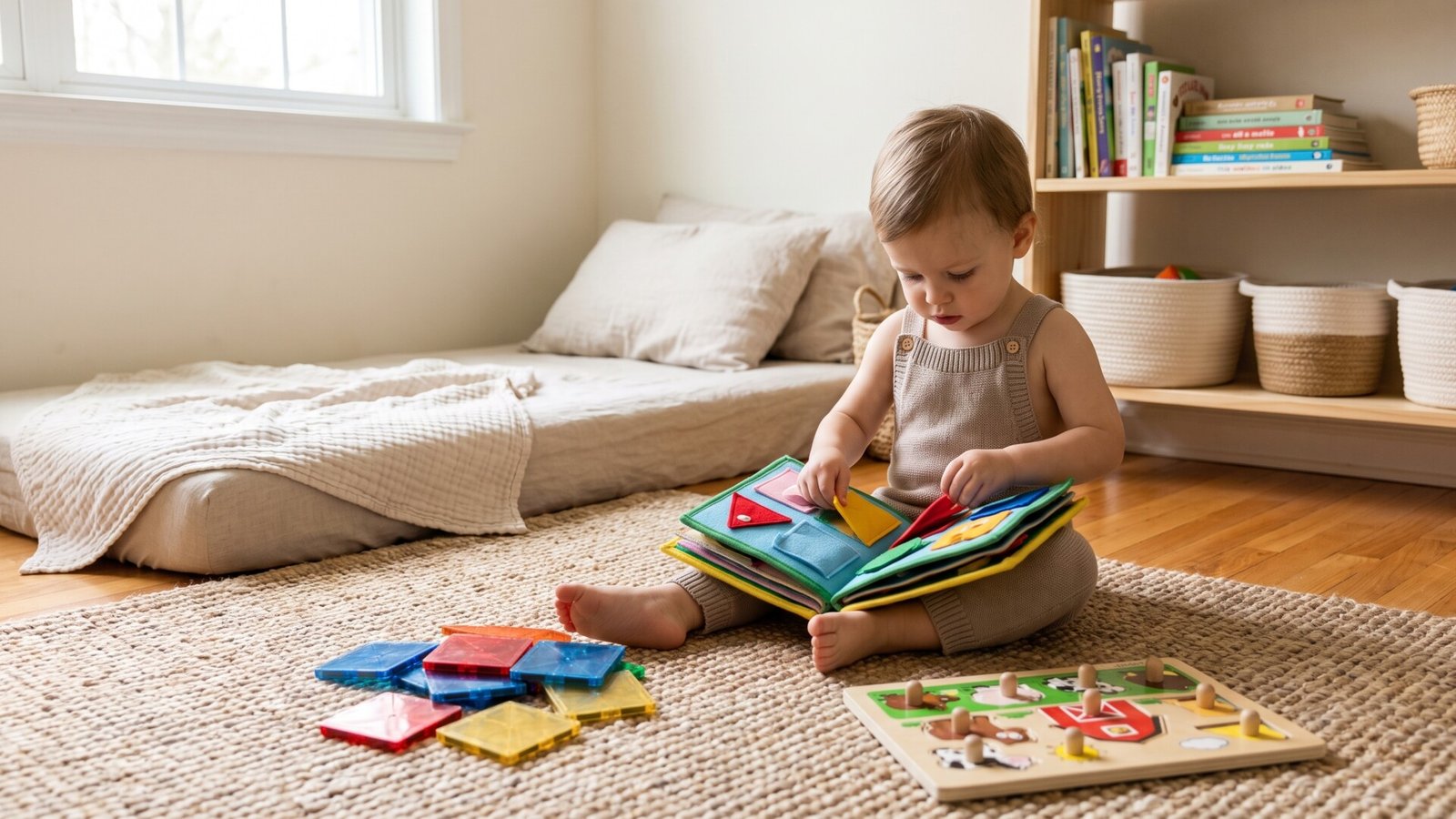
Quiet books work beautifully during the nap transition because they give toddlers something to touch, manipulate, and explore—all without noise or overstimulation.
Great options include:
- Felt quiet books with zippers, snaps, matching activities
- Montessori-style busy books with shapes, buckles, Velcro pieces
- Fabric lift-the-flap books
- Travel quiet books that zip shut and can’t spill pieces everywhere
Why they work for 2-year-olds:
Quiet books deliver fine-motor engagement plus storytelling, which keeps a toddler focused for long periods. They also encourage seated play rather than running around.
A small tip: rotate quiet books weekly. Toddlers love novelty.
2. Magnetic Tiles for Calm, Repetitive Building
Magna-Tiles, PicassoTiles, and similar sets are some of the best quiet toys you can offer. At two, your toddler won’t build castles or rockets yet, but they WILL:
- make stacks
- build simple walls
- match colors
- create “beds” or “houses” for figurines
- experiment with sticking pieces to a metal baking sheet
Magnetic tiles are quiet, clean, and inherently soothing. They also encourage deep concentration, which is what you want during nap transition time.
Set out a small tray of tiles—about 10–15 pieces is plenty. Too many can overwhelm a toddler.
3. Soft Dolls and Pretend-Play Figures
Pretend play becomes much richer around age two. Toddlers love comforting, simple figures like:
- soft fabric dolls
- small wooden peg dolls
- plush animals
- toddler-safe action figures
These encourage gentle storytelling, nurturing play, and imaginative exploration—all quiet activities.
You can also include accessories:
- a small doll blanket
- a play bottle
- a tiny pillow
- a “bed” made from a shoebox
Toddlers love to replicate their own routines: putting dolls down for a nap, feeding them, or giving them a blanket. This mirrors your nap transition goal and keeps things peaceful.
4. Wooden Puzzles (Chunky or Peg Puzzles)
At age two, toddlers do best with:
- shape puzzles
- animal puzzles
- vehicle puzzles
- color-matching puzzles
- two-piece puzzles that match halves
These are short, satisfying tasks that promote concentration, hand-eye coordination, and calm focus.
To prevent overwhelm, offer one puzzle at a time. Place the pieces in a small bowl so your toddler can dump and sort easily.
A tip you’ll love: keep puzzle rotation fresh. Two-year-olds can outgrow a puzzle in only a month developmentally, so rotating makes each one feel new again.
5. Simple Stacking and Sorting Toys
Great options include:
- wooden stacking rings
- nesting cups
- shape sorters
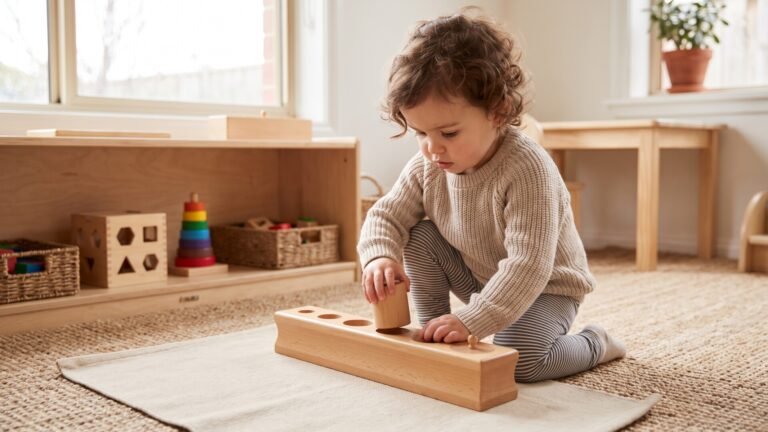
- peg-and-hole boards
- stacking blocks or foam blocks
These toys support:
- size comparison
- problem-solving
- hand-eye coordination
- calm repetition
Sorting is especially soothing for toddlers. Give them a task like “put all the blue ones here” or “let’s sort by size.” This turns quiet time into structured calm work.
6. Water Wow Books or Magic Reveal Pads
These are HUGE lifesavers during the nap transition. They are completely mess-free, calming, and reusable.
Why they’re perfect:
- one “water pen”
- no actual water spill
- soothing repetitive strokes
- no loud activity
- no pieces to lose
Your toddler will sit quietly filling in pictures, watching colors appear, and repeating the process for 15–20 minutes at a time.
These work especially well for toddlers who want stimulation but still need controlled calm activities.
7. Matching Games for Independent Play
Two-year-olds love matching because it gives a sense of accomplishment. Use:
- magnetic matching boards
- two-piece matching puzzles
- fabric memory cards (quiet and soft!)
- Montessori object-to-card matching sets
Choose sets with:
- big, durable pieces
- easy themes (animals, foods, vehicles)
- self-correcting designs
These are wonderful for quiet time because they involve slow, intentional thinking—not high-energy movement.
8. Lacing Beads and Threading Toys
Threading beads onto a lace builds:
- fine motor strength
- bilateral coordination
- concentration
- quiet persistence
Choose:
- oversized wooden beads
- thick safe laces
- simple shapes (circles, squares, hearts)
Threading is calming because it creates a rhythmic motion toddlers enjoy. It also takes time, which helps extend the quiet time window.
9. Sensory Books and Soft Textures
For toddlers still transitioning out of needing cuddles to fall asleep, sensory books can help create calm without requiring your presence.
Look for:
- touch-and-feel books
- crinkle-page fabric books
- plush texture books
- fuzzy or textured animals on the pages
Soft textures soothe the nervous system and encourage slow exploration.
Place these near a soft blanket or stuffed animal to make quiet time feel cozy.
10. Stickers, Reusable Sticker Pads, and Felt Boards
Stickers are magic at this age. They require fine-motor control, intense focus, and a seated position.
Options that work best for quiet time:
- reusable stickers on glossy scenes
- felt boards with themed shapes
- puffy stickers
- vinyl window stickers (great for car quiet time too)
If your toddler loves peeling but struggles with precision, pre-peel the corner to make it easier.
Stickers can occupy a toddler quietly for up to an hour if you rotate scenes.
11. Board Books That Encourage Slow Interaction
During quiet time, choose books that have:
- gentle illustrations
- predictable patterns
- simple narratives
- calming topics (animals, bedtime, nature)
Avoid books that are overly silly or energetic—they can ramp up instead of winding down.
Offer only a few books at once. A rotating book basket keeps interest high.
12. Soft Building Toys: Foam Blocks and Plush Blocks
Wooden blocks can be loud if dropped or tossed, but foam or plush blocks are perfect for quiet time.
These allow:
- stacking
- knocking down gently
- sorting by color
- simple building play
They support construction without the noise or overstimulation.
You can keep 5–10 blocks in a calming basket so the activity stays contained.
13. Simple Train Sets
Toddler wooden train sets are surprisingly calming during rest time. The gentle repetitive movement of pushing the train around the track helps regulate the nervous system.
Use:
- small oval track layout
- one or two train cars
- no bridges or accessories (those get loud or frustrating)
This setup encourages slow, patterned play.
Adding a small fabric tunnel or soft bridge can make the play cozy and safe.
14. Calm Sensory Tools for Quiet Exploration
These should be non-messy and non-stimulating, unlike high-energy sensory bins.
Good options include:
- squishy sensory balls
- slow-rise foam toys
- textured silicone bubble poppers
- a soft sensory wand
- small fidget rollers
Stick to slow, calming sensory items—not spinning, flashing, or noisy tools.
A silicone bubble popper shaped like a simple square can be incredibly calming for a 2-year-old.
15. Shadow Books or Flashlight Play (Supervised)
If your toddler is still in the part of nap transition where the room needs to stay dim, quiet flashlight play can be magic.
Use:
- board books with cutouts
- shadows on the wall
- silhouette cards
- gentle light-tracking activities
This creates a peaceful environment while keeping your toddler engaged.
How to Set Up Quiet Time So It Actually Works
The toys you choose matter—but the structure matters even more. Here’s how to make quiet time successful every day.
1. Keep the Routine Predictable
Toddlers thrive on routine. Make quiet time happen at the same point each day, with the same steps:
- Diaper and snack
- Dim lights
- Soft music or white noise
- Choose toys from the quiet time basket
- Set expectations gently (“This is your quiet play time now.”)
Predictability reduces resistance.
2. Use a “Quiet Time Basket” System
Instead of giving full access to every toy, create:
- 1 basket per day
- 3–4 toys inside
Examples:
Monday basket: stickers, peg puzzle, felt animals
Tuesday basket: magnetic tiles, doll, quiet book
Wednesday basket: lacing beads, board book, foam blocks
Rotation is crucial. Toddlers stay engaged longer with fewer choices and more novelty.
3. Keep the Space Contained and Safe
The goal is peaceful independence, not wandering around the house.
Use:
- baby gate
- a low toddler bed
- a cozy corner
- a sparse play area with soft lighting
Avoid:
- loud toys
- anything with small parts
- high-energy toys (cars with loud wheels, toy drums, etc.)
4. Expect Some Adjustment Time
When dropping naps, toddlers rarely jump into perfect quiet time. Most need 7–14 days of practice.
Expect:
- testing boundaries
- asking for you
- switching toys quickly
- early restlessness
Stick with it. Within a couple of weeks, most toddlers settle into a peaceful rhythm.
5. Start with 20 Minutes and Build Up
At the beginning:
- aim for 20 minutes
- then gradually extend to 30–40 minutes
- some toddlers eventually enjoy 1 hour of quiet time
The goal isn’t perfection—just peaceful independence.
Sample Quiet Time Setup for a 2-Year-Old
Here’s a replicable example:
Environment
- dim lamp
- white noise
- cozy blanket
- low shelf with today’s quiet basket
Basket Contents
- reusable sticker pad
- soft doll
- magnetic tiles
- one board book
Flow
You read one quick story, set expectations, hand the basket to your child, and step out for 20–40 minutes.
This simple setup supports calm exploration without frustration or overstimulation.
How to Know Quiet Time Is Working
You’ll see signs like:
- calmer afternoons
- fewer meltdowns
- more independent play at other times
- deeper sleep at night
- increased focus
- happier transitions
Quiet time gives toddlers the space they need to regulate their bodies and minds—whether or not they actually sleep.
When Quiet Time Is Too Stimulating (and What to Adjust)
If your toddler becomes wild, unfocused, or loud, the toys may be too stimulating. Adjust by removing toys that:
- involve fast movement
- require big physical actions
- light up or make noise
- contain dozens of pieces
Swap in slower, simpler toys:
- quiet book
- matching puzzles
- foam blocks
- Water Wow pad
- doll and blanket
- lacing beads
When in doubt, simplify.
A 2-Year-Old’s Favorite Quiet Time Toys
Here’s a fast reference list you can use for linking throughout your site:
- Quiet books
- Felt board sets
- Reusable sticker pads
- Magnetic tiles
- Chunky wooden puzzles
- Lacing beads
- Nesting cups
- Shape sorters
- Foam blocks
- Water Wow books
- Board books
- Soft dolls
- Wooden trains
- Bubble poppers
- Sensory squish toys
- Fabric memory cards
These are consistently the most calming, dependable choices for families going through the nap transition phase.
How to Keep Quiet Time From Becoming Playtime Chaos
If your toddler starts treating quiet time like normal playtime, try:
- dimmer lighting
- a smaller toy selection
- soft music or white noise
- using only toys from the quiet basket
- removing all high-energy toys from the room
The environment should subtly signal “rest,” not “party.”
A Final Word
Quiet time is one of the most valuable routines you can establish for your 2-year-old—and for yourself. With the right toys, your toddler will learn to self-regulate, explore independently, and enjoy a peaceful break in the middle of the day, even as naps fade.